Everyday Benefits
Turmeric Shot Benefits: What You Actually Get From One
Key takeaways
- Curcumin, the active compound in turmeric, shows genuine anti-inflammatory and antioxidant effects in research, but most positive trials use concentrated extracts, not the small dose in a shot.
- Curcumin is poorly absorbed alone; black pepper (piperine) and dietary fat improve absorption, which is why good shots include both.
- Detox and immune-boost claims are marketing overreach, not established science.
- High doses can cause stomach upset, may interact with blood thinners, and warrant caution if you have gallbladder problems.
Walk into any juice bar or scroll through a wellness feed and you will find the turmeric shot: a small, fiercely orange drink, usually a couple of ounces, sold as a daily hit of anti-inflammatory power. The claims come fast, that it fights inflammation, boosts immunity, and detoxes your system in one bright gulp. Turmeric is a genuinely interesting spice with real research behind it, so the appeal is understandable. But there is a large gap between what turmeric’s active compound can do in a lab and what a single shot delivers to your body. Here is an honest look at both.
What a turmeric shot actually is
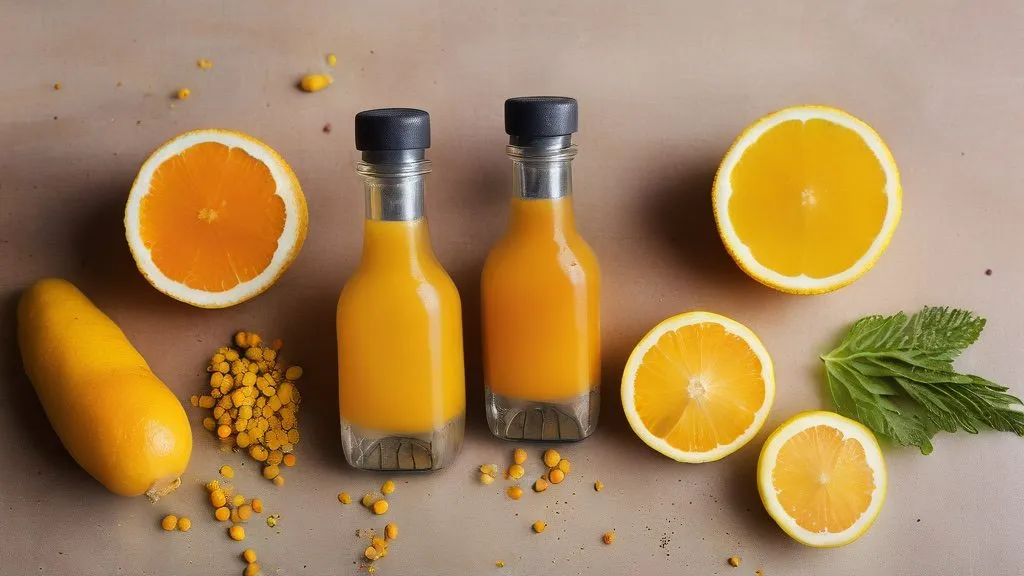
A turmeric shot is a concentrated drink built around turmeric root or turmeric juice, usually blended with a few supporting ingredients. Ginger is common for its own peppery kick, citrus like lemon or orange adds vitamin C and flavor, and a pinch of black pepper often appears because, as we will see, it changes how well the key compound absorbs. Some versions add coconut or a little oil.
The reason turmeric gets attention at all is a compound called curcumin. Curcumin is a curcuminoid, the yellow pigment that gives turmeric its color, and it is the ingredient responsible for most of turmeric’s studied effects. Importantly, turmeric root is only a small fraction curcumin by weight, roughly 2 to 5 percent, so the amount of curcumin in a shot is far smaller than the amount of turmeric you can see.
What the research on curcumin shows
Curcumin is not snake oil. It has real, documented biological activity. In a widely cited review, Hewlings and Kalman in the journal Foods describe curcumin’s antioxidant and anti-inflammatory properties and its ability to interact with molecules involved in inflammation. On the clinical side, a 2016 systematic review and meta-analysis in the Journal of Medicinal Food by Daily and colleagues looked at turmeric and curcumin for arthritis symptoms and found that curcumin extracts, typically around 1,000 mg per day, reduced joint pain and stiffness in people with arthritis, though the authors were careful to note the trials were small and of limited quality and called for larger, more rigorous studies.
That is the honest state of the evidence: promising signals for inflammation and joint symptoms, built mostly on small studies using concentrated, standardized extracts. It is a reason to take curcumin seriously as a research subject. It is not proof that a beverage will do the same thing.
The absorption problem, and why it matters here
Here is the catch that turns curcumin’s lab promise into a much smaller real-world effect: on its own, curcumin is poorly absorbed. Swallow it and most of it passes through without ever reaching your bloodstream in a meaningful amount, because it breaks down quickly and does not dissolve well in water.
This is the single most important fact for judging a turmeric shot, and it is also why formulation matters. In a classic 1998 study, Shoba and colleagues in Planta Medica found that adding piperine, the active compound in black pepper, increased curcumin’s bioavailability by roughly 2,000 percent in human volunteers. Dietary fat helps too, because curcumin is fat-soluble. That is the logic behind including black pepper and sometimes oil in a shot, and it is why supplement makers pair curcumin with piperine or use phospholipid and liposomal formulas designed to survive digestion.
Even with these tricks, a shot faces a math problem. Most positive human trials use hundreds to a couple thousand milligrams of standardized curcumin per day. A shot, made from raw turmeric that is only a few percent curcumin, delivers a fraction of that. So even a well-formulated shot with black pepper is likely giving you far less absorbable curcumin than the doses that produced results in studies.
Where the marketing gets ahead of the science
This is where a careful reader should slow down. The same evidence-first lens worth applying to any wellness trend, including oil pulling and what the evidence actually shows, applies here: separate the plausible mechanism from the oversold promise.
Two claims in particular deserve skepticism.
- Detox. Detox is a marketing word, not something a drink accomplishes. Your liver and kidneys handle the removal of waste. A turmeric shot has some antioxidant compounds, but it does not cleanse toxins from your body, and no reputable research says otherwise.
- Immune boosting. Curcumin influences inflammatory signaling in laboratory settings, but that is not the same as strengthening immune defense in a healthy person, and there is no strong evidence that a daily turmeric shot prevents illness. The National Center for Complementary and Integrative Health notes that turmeric has not been shown to be helpful for most health conditions studied, and much of the human evidence remains preliminary.
None of this means a turmeric shot is useless. It means the honest framing is modest: a pleasant, spice-forward drink that may offer small benefits for some people, not a treatment or a shield.
Safety and who should be careful
For most healthy adults, culinary amounts of turmeric are considered safe, and a daily shot is unlikely to cause harm. But there are real cautions worth knowing.
High doses of curcumin can cause stomach upset, nausea, or diarrhea in some people. Curcumin may also interact with blood-thinning medication, so if you take an anticoagulant, this is a conversation to have with your doctor rather than a habit to start on your own. Turmeric can stimulate bile production, which means people with gallbladder problems, such as gallstones or bile duct obstruction, should be cautious. And because concentrated supplement doses go well beyond what you would eat in food, they carry more of these risks than a splash of turmeric in cooking does. If you are pregnant, breastfeeding, on medication, or managing a health condition, check with a healthcare professional before making turmeric shots a routine.
The honest bottom line
A turmeric shot sits in a familiar place: a real compound with genuine research behind it, wrapped in claims that run well past the evidence. Curcumin does have anti-inflammatory and antioxidant activity, and the joint-symptom data is encouraging. But it absorbs poorly, the shot delivers a modest dose, and the trials that showed benefits used concentrated extracts you cannot easily match by drinking juice.
If you enjoy the ritual and the taste, a turmeric shot with black pepper is a fine, low-risk addition to your day. Just keep your expectations grounded. It is not a detox, not an immune booster, and not a substitute for medical care. If your real goal is a research-level curcumin dose for inflammation, a standardized supplement with piperine or a specially formulated absorbable version will get you far closer than any shot.
This article is for general information and is not medical advice. Talk to a doctor about your specific health, especially before starting any supplement.
Frequently asked questions
Do turmeric shots actually reduce inflammation?
Curcumin, turmeric's active compound, has anti-inflammatory activity in laboratory and clinical studies. But those studies typically use standardized, concentrated curcumin extracts at doses far higher than a single shot provides, and curcumin absorbs poorly on its own. A turmeric shot delivers a modest amount, so any real-world anti-inflammatory effect is likely small. It is a reasonable habit, not a treatment.
How much curcumin is in a turmeric shot?
It varies widely by brand and is often not disclosed. Raw turmeric is only about 2 to 5 percent curcumin by weight, so even a shot with a generous amount of turmeric delivers a fairly small curcumin dose. Many clinical trials use 500 to 2,000 mg of standardized curcumin per day, which is difficult to reach through shots alone.
Does black pepper in a turmeric shot really matter?
Yes. Curcumin is poorly absorbed on its own. In a classic 1998 study, piperine, the active compound in black pepper, increased curcumin bioavailability by around 2,000 percent. That is why well-formulated shots and supplements include black pepper, and why fat in the same meal also helps, since curcumin is fat-soluble.
Can a turmeric shot boost my immune system?
There is no strong evidence that a turmeric shot meaningfully boosts immunity or prevents illness. Curcumin interacts with inflammatory pathways in the lab, but that is not the same as strengthening immune defense in healthy people. Treat immune-boost claims as marketing rather than established science.
Do turmeric shots detox your body?
No. Detox is a marketing term, not a physiological process a drink can perform. Your liver and kidneys handle detoxification. A turmeric shot is a flavored beverage with some antioxidant compounds, not a cleanse, and it does not remove toxins from your system.
Are turmeric shots safe for everyone?
For most healthy adults, culinary amounts of turmeric are considered safe. But high doses can cause stomach upset, nausea, or diarrhea. Curcumin may interact with blood thinners and could be a concern if you have gallbladder problems, since turmeric can stimulate bile. If you are pregnant, on medication, or have a health condition, check with a doctor first.
Sources
Every claim above is drawn from these primary sources. Last checked July 2026.
- 1.Hewlings SJ, Kalman DS. Curcumin: A Review of Its Effects on Human Health. Foods, 2017.
- 2.Daily JW, et al. Efficacy of Turmeric Extracts and Curcumin for Alleviating the Symptoms of Joint Arthritis: A Systematic Review and Meta-Analysis. Journal of Medicinal Food, 2016.
- 3.Shoba G, et al. Influence of piperine on the pharmacokinetics of curcumin in animals and human volunteers. Planta Medica, 1998.
- 4.National Center for Complementary and Integrative Health (NCCIH), Turmeric.