Energy & Longevity
Ergothioneine: The 'Longevity Vitamin' From Mushrooms
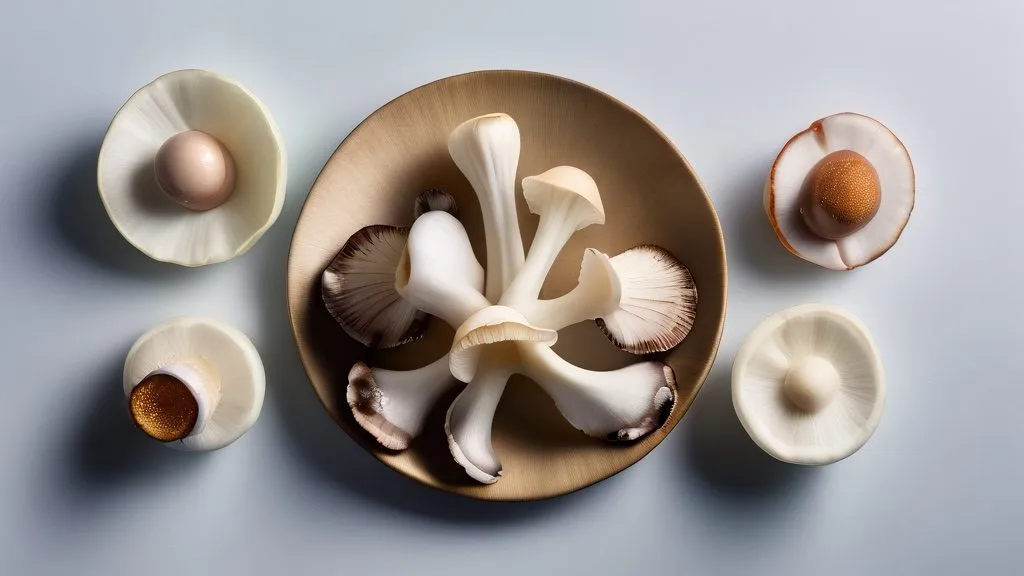
Key takeaways
- Ergothioneine is a diet-derived antioxidant amino acid the human body cannot synthesize; mushrooms are by far the richest food source.
- A dedicated transporter (OCTN1/SLC22A4) actively pulls ergothioneine into tissues under oxidative stress, suggesting it plays a real physiological role rather than passing through.
- Observational studies link higher blood ergothioneine to lower cardiovascular disease and mortality, earning it the 'longevity vitamin' label, but this is correlation, not proof.
- Food-first is the smart move: oyster, shiitake and king trumpet mushrooms are rich and cheap; supplements exist and appear safe but remain promising-not-proven.
Most antioxidants you read about are things your body either makes for itself or shrugs off quickly if you eat too much. Ergothioneine is different, and that difference is what makes it interesting. Your body cannot manufacture it at all, yet it has gone to the trouble of building a dedicated pump to grab it from your food and stash it in your most vulnerable tissues. When the body works that hard to hold onto something it cannot make, biologists start to pay attention. That is how a compound found mostly in mushrooms ended up with the nickname “longevity vitamin.” Here is the honest version of what we know, and what we do not.
What ergothioneine actually is
Ergothioneine is a naturally occurring amino acid with an unusual sulfur-containing structure that lets it act as an antioxidant. The critical fact about it is where it comes from: in nature, only certain fungi and a handful of soil bacteria can actually produce it. Plants and animals, including humans, cannot. Everything higher up the food chain, from a cow to you, only carries the ergothioneine it absorbed from what it ate. That is why mushrooms, which are fungi, sit at the top of the dietary list by a wide margin.
Because you cannot make it, your ergothioneine status depends entirely on diet. And your body clearly treats it as worth keeping.
The dedicated transporter is the key clue
The single most compelling piece of ergothioneine biology is that humans have a specific transporter for it, a protein called OCTN1 (gene name SLC22A4). This transporter recognizes ergothioneine with high affinity and actively pulls it out of the bloodstream and into cells. Most dietary antioxidants just drift in and out of tissues passively. Ergothioneine gets an escort.
Even more telling is where it ends up. As reviewed by researchers including Cheah, Halliwell and colleagues, ergothioneine concentrates in tissues that face heavy oxidative stress, such as red blood cells, bone marrow, the eyes and the brain. It can also linger in the body far longer than most water-soluble compounds. A molecule you cannot make, that your body actively imports and then parks in your most exposed tissues and holds for weeks, does not look like a passenger. It looks like something the body finds useful. That reasoning is exactly why biochemist Bruce Ames included ergothioneine in his 2018 PNAS proposal of “longevity vitamins”, nutrients that may not prevent classic deficiency disease but could help defend against the gradual damage of aging.
It is worth being clear that this is an argument from design, not from proof. The transporter tells us the body values ergothioneine; it does not tell us that eating more of it makes you healthier.
What the human evidence shows
The most-cited human finding comes from a 2020 study published in the journal Heart. Smith and colleagues measured over a hundred blood metabolites in more than 3,000 people from a large Swedish population study and followed their health over time. Ergothioneine stood out. It was the metabolite most strongly linked to a health-conscious eating pattern, and higher blood levels were associated with a lower risk of coronary disease and, notably, lower cardiovascular and overall mortality.
That is a genuinely striking result, and it is the backbone of the “longevity vitamin” story. But it needs an honest caveat, and it is a big one. This is an observational study, which means it can show that two things travel together but cannot prove that one causes the other. People with high blood ergothioneine got there by eating mushrooms and other whole foods, and people who eat that way tend to differ in dozens of other ways: they may exercise more, smoke less, or have more income and better healthcare. Any of those could explain part of the benefit. The study cannot separate the molecule from the lifestyle it rides along with.
Beyond cardiovascular outcomes, some observational and mechanistic work has linked lower ergothioneine levels to markers of cognitive decline and frailty in older adults, which has fueled interest in a possible role in brain aging. This is even earlier and thinner evidence than the heart data, and should be read as a reason to keep studying, not a reason to expect a memory benefit.
The gap between “promising” and “proven”
Here is the part the marketing tends to skip. Almost all the encouraging human data on ergothioneine is observational or mechanistic. What is largely missing is the gold standard: large, long-term randomized trials where researchers give people ergothioneine (or a placebo) and track whether the supplemented group actually lives longer, has fewer heart attacks, or ages better. That kind of study is expensive and slow, and for ergothioneine it mostly has not been done yet.
This is the same trap that catches nearly every longevity compound. A molecule can look fantastic in a test tube, extend the life of a worm or a mouse, and correlate beautifully with good health in population data, and still fail to do anything measurable when tested properly in humans. Ergothioneine has not failed such a test; it simply has not been through one at scale. A 2022 review by Beelman and colleagues in FEBS Letters makes the optimistic case for raising ergothioneine in the food supply, but even enthusiastic researchers frame it as a hypothesis worth testing, not a settled fact.
The sensible, food-first approach
None of this uncertainty means you should ignore ergothioneine. It means you should meet it where the evidence actually is, which points cleanly toward food. Mushrooms are cheap, widely available, and by far the richest source, and they bring fiber, B vitamins and other compounds that a capsule does not. Among common varieties, king trumpet (king oyster), oyster and shiitake mushrooms tend to be the richest, well above white button mushrooms, though even the humble button variety contributes. Content varies widely by species and batch, so variety helps.
A practical bonus: ergothioneine is heat-stable, so normal cooking does not destroy it. Since you should cook most culinary mushrooms anyway, you lose little by roasting, sauteing or simmering them. A few mushroom-forward meals a week is a low-cost, low-risk way to raise your intake and lands you in the same dietary pattern that looked so good in the Heart study.
Supplements are the other option. Purified ergothioneine is sold in capsules, and it appears well tolerated in the short human studies done so far. If you genuinely dislike mushrooms or want a fixed daily dose, it is a reasonable choice, but it is an early bet, not a proven one. This is also why ergothioneine shows up as an ingredient in blended longevity products like our Pep Tonic review: it has a good story and a clean safety record, which is enough to earn a spot on a label even before the definitive human trials exist. It belongs in the same “biologically interesting, not yet proven” bucket as compounds like spermidine.
The bottom line
Ergothioneine is one of the more legitimately intriguing molecules in the longevity conversation. The fact that you cannot make it, that your body built a dedicated transporter to hoard it, and that higher levels track with lower mortality in real people is a rare trio of signals pointing the same direction. But intriguing is not the same as proven. The human evidence is largely observational, the interventional trials are missing, and the “longevity vitamin” label is a well-reasoned hypothesis rather than a verdict. Eat more mushrooms, enjoy the meal, and treat any supplement as a promising extra rather than a guarantee. This article is not medical advice.
Frequently asked questions
What foods are high in ergothioneine?
Mushrooms are in a league of their own. Among common varieties, oyster, shiitake and especially king trumpet (king oyster) mushrooms are the richest, with king trumpet often measuring several times higher than white button mushrooms. Content varies a lot between species and even between growing batches. Beyond mushrooms, smaller amounts appear in foods like tempeh, some organ meats, black and red beans and oat bran, but nothing else comes close to fungi. Since fungi and a few microbes are the only things in nature that actually make ergothioneine, everything else in the food chain only carries the amount it absorbed. A few servings of mushrooms a week is the simplest way to raise your intake.
Is ergothioneine proven to extend life?
No. It has an appealing nickname and genuinely interesting biology, but 'proven' is too strong. The strongest human data are observational: in a large Swedish population study, people with higher blood ergothioneine had lower rates of cardiovascular disease and death. Observational studies cannot prove cause and effect, because people who eat more mushrooms may simply have healthier diets and lifestyles overall. There are very few long-term randomized human trials, so no one has shown that taking ergothioneine makes people live longer or prevents disease. It is a promising marker of a healthy pattern, not a demonstrated life-extension pill.
Should I supplement with ergothioneine?
For most people, food first is the sensible answer. Cooking mushrooms into your regular meals a few times a week is cheap, pleasant and comes with fiber and other nutrients a capsule does not. Ergothioneine supplements do exist and appear to be well tolerated in the short studies done so far, so they are a reasonable option if you rarely eat mushrooms or want a consistent dose. But treat them as an early bet rather than an established intervention, since the human trial evidence for supplementing is thin. If you take medication or have a health condition, ask your doctor first.
Why is ergothioneine called a 'longevity vitamin'?
The phrase comes from a 2018 paper by biochemist Bruce Ames, who proposed a category of 'longevity vitamins': nutrients that are not strictly required to prevent short-term deficiency disease but that may help protect against the slow damage of aging. Ergothioneine fits because your body cannot make it, actively imports and retains it through a dedicated transporter, and concentrates it in tissues exposed to oxidative stress. That combination hints the body treats it as valuable. The 'vitamin' label is a hypothesis about its role, not an official classification, and it does not mean benefits are proven.
Is ergothioneine safe?
It appears to have a good safety profile. It is a normal part of the human diet, it is water-soluble, and the human trials conducted so far, though small and short, have not reported serious safety problems. Regulators in some regions have reviewed synthetic ergothioneine for use in foods and supplements without flagging major concerns. That said, long-term, high-dose safety in humans is not fully characterized, simply because the large studies have not been done. Pregnant or breastfeeding people, and anyone on medication or managing a condition, should check with a clinician before adding a concentrated supplement. This article is not medical advice.
Does cooking mushrooms destroy ergothioneine?
Ergothioneine is unusually heat-stable, so normal cooking does not destroy most of it, which is good news because you should not eat most culinary mushrooms raw anyway. Cooking can even improve overall antioxidant availability from mushrooms. You are not losing the benefit by sauteing, roasting or adding mushrooms to soups and stir-fries. The bigger driver of how much you get is which mushroom you choose, since content varies widely by species, with king trumpet, oyster and shiitake at the higher end.
Sources
Every claim above is drawn from these primary sources. Last checked July 2026.
- 1.Smith E, et al. Ergothioneine is associated with reduced mortality and decreased risk of cardiovascular disease. Heart, 2020.
- 2.Ames BN. Prolonging healthy aging: Longevity vitamins and proteins. PNAS, 2018.
- 3.Beelman RB, et al. Health consequences of improving the content of ergothioneine in the food supply. FEBS Letters, 2022.
- 4.Borodina I, Kenny LC, Cheah IK, Halliwell B, et al. The biology of ergothioneine, an antioxidant nutraceutical. Nutrition Research Reviews, 2020.