Energy & Longevity
Spermidine: The Longevity Compound in Your Food, Explained
Key takeaways
- Spermidine is a dietary polyamine that induces autophagy, the cellular self-cleaning process linked to healthy aging.
- It extends lifespan in yeast, worms, flies and mice, and higher dietary intake tracks with lower mortality in human population studies.
- Human trial evidence is early and small; there are no large long-term randomized trials showing it extends human lifespan.
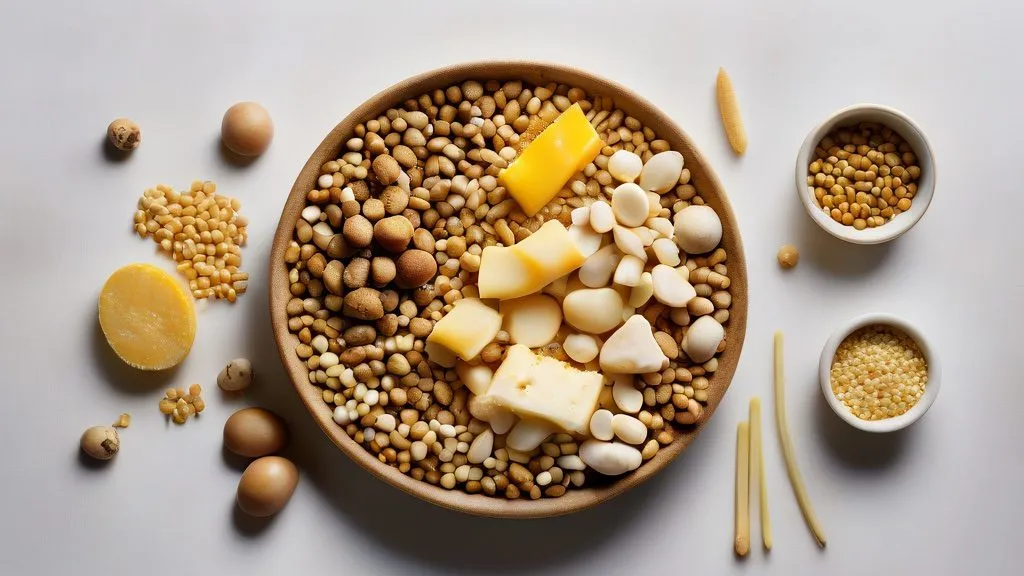
- Wheat germ is the richest food source, followed by aged cheese, mushrooms, soy and natto, legumes and whole grains; food-first is the sensible approach and supplements are an early bet.
Every few years a molecule gets crowned as the next longevity breakthrough, and lately spermidine has been wearing the crown. It has an unusual pitch: instead of being a lab-made drug, it is a compound you already eat, hiding in wheat germ, aged cheese and mushrooms. The science behind it is genuinely interesting, and unusually for this corner of the wellness world, some of it is quite solid. But there is also a gap between what has been shown in a petri dish or a mouse and what has been shown in people. Here is the honest version.
What spermidine actually is
Spermidine is a polyamine, a small molecule made naturally by your own cells and also supplied by the food you eat and by gut bacteria. It was first identified centuries ago in human semen, which is where the name comes from, but it is present throughout the body and across almost all living things. Levels in your tissues tend to fall as you age, and that decline is part of what drew researchers to it as a possible target for healthy aging.
The reason spermidine matters is what it does inside cells. It is one of the most reliable natural triggers of autophagy, the process by which cells break down damaged proteins and worn-out parts and recycle the raw materials. Think of it as cellular housekeeping. Autophagy tends to slow with age, and sluggish cleanup is thought to contribute to the accumulation of cellular junk that marks aging tissue. By keeping autophagy switched on, spermidine appears to help cells stay tidy. Fasting and exercise do something similar, so spermidine is best understood as one lever among several rather than a magic switch.
The animal evidence is strong
This is where spermidine has its most impressive credentials. In a widely cited 2016 study, Eisenberg and colleagues in Nature Medicine showed that dietary spermidine extended lifespan in mice and protected their hearts against age-related decline, and they tied those effects to enhanced autophagy. That paper sits alongside a broader body of work, summarized by Madeo and colleagues in Science, showing lifespan extension across yeast, worms, flies and mice.
Consistent results across such different organisms are a strong sign that spermidine is tapping into a fundamental, conserved biological pathway rather than a fluke of one species. That is genuinely encouraging. The catch, and it is the same catch that trips up almost every longevity compound, is that mice are not people. A molecule that adds weeks to a mouse’s life under controlled lab conditions has not thereby been shown to add years to a human’s, and the leap from one to the other is exactly where most promising anti-aging ideas quietly fail.
What the human evidence shows
The human data fall into two buckets, and it is worth keeping them separate.
The first bucket is observational. In a prospective, population-based study, Kiechl and colleagues in the American Journal of Clinical Nutrition followed people over many years and found that those with higher dietary spermidine intake had lower overall mortality. The size of the association was striking, and other cohorts have reported similar links, including to better cardiovascular outcomes and cognition. That is a real and repeatable signal.
But observational studies come with a permanent asterisk: they show association, not causation. People who eat more spermidine-rich foods, such as whole grains, legumes, mushrooms and modest amounts of aged cheese, tend to eat healthier diets overall, and no statistical adjustment fully removes that entanglement. It is entirely possible that spermidine is partly a marker of a good diet rather than the active ingredient. The finding is worth taking seriously; it is not proof.
The second bucket is small human trials. The most discussed is the memory work by Wirth and colleagues, published in Cortex, a randomized trial testing a spermidine-rich supplement in older adults at risk for cognitive decline. Early pilot work hinted at a memory benefit, which generated real excitement, but larger and better-controlled follow-up trials produced more mixed and modest results. So the cognitive story is genuinely open rather than settled: interesting enough to keep studying, not strong enough to promise. Across these trials, spermidine has generally been well tolerated, which is reassuring even though the studies are short and small.
The bottom line for humans: strong mechanism, promising population data, and early, inconclusive trials. What is missing is the thing that would actually settle it, a large, long-term randomized trial showing spermidine extends human lifespan or meaningfully lowers disease. That trial does not yet exist.
The best food sources
The good news is that you do not need to wait for that trial to raise your intake, because spermidine is abundant in ordinary food.
- Wheat germ is the richest common source by a wide margin, which is exactly why so many supplements are concentrated wheat-germ extract. A spoonful stirred into oatmeal, yogurt or a smoothie is the single easiest way to boost intake.
- Aged and mature cheeses are notably high, with content rising as the cheese ripens.
- Mushrooms of various kinds are a strong, low-calorie source.
- Soybeans and fermented soy foods, especially natto, are rich in polyamines.
- Legumes such as peas, lentils and chickpeas contribute meaningfully.
- Whole grains and some fruits and vegetables round out a spermidine-friendly diet.
Notice that this is essentially a description of a traditional, largely plant-forward, whole-food diet, the same pattern that shows up in the mortality data. That overlap is part of why food-first makes sense here: even if spermidine itself turns out to be only part of the story, eating this way is well-supported for other reasons.
Should you take a supplement?
Supplements, usually standardized wheat-germ extract, exist and are widely sold, and in the short trials done so far they have been generally well tolerated. If you want a consistent daily dose without thinking about it, they are a reasonable option. But be clear-eyed about what you are buying: the powerful lifespan data are in animals, the human data are early, and no supplement has been shown to deliver the anti-aging outcomes people are hoping for. Treat it as an early bet, not an established intervention.
If you are already interested in this category, spermidine sits in the same conversation as products marketed around cellular energy and healthy aging. Our Pep Tonic review looks at one such spermidine-containing product in detail, and if your broader interest is longevity biology, our guide on how to increase NAD naturally covers a related and equally hyped molecule with the same honest lens.
The honest verdict
Spermidine is one of the more credible names in the longevity space, and that is meant as faint praise in a field full of overreach. The mechanism is real, the animal lifespan data are strong and consistent, and the human population data point in the right direction. What is missing is the proof that ties it all together in people, and until a large long-term trial delivers that, spermidine remains promising-not-proven.
The sensible response writes itself. Lean into the food sources, which are cheap, safe and part of a diet that is good for you regardless. If you want to try a supplement on top, do it with clear expectations rather than the belief that you have found the fountain of youth. This article is educational and not medical advice; if you have a health condition or take medication, talk to your doctor before adding a concentrated supplement.
Frequently asked questions
What foods are high in spermidine?
Wheat germ is by far the richest common source, which is why many supplements are made from wheat-germ extract. After that, aged and mature cheeses, mushrooms, soybeans and fermented soy foods like natto, legumes such as peas and lentils, whole grains, and some fruits and vegetables all contribute. A varied diet built around whole grains, legumes, mushrooms and modest amounts of aged cheese naturally raises your intake without any pills.
Does spermidine really extend life?
In laboratory animals, yes: spermidine reliably extends lifespan in yeast, worms, flies and mice, largely by switching on autophagy. In humans the picture is weaker but interesting. Observational studies link higher dietary spermidine intake to lower overall mortality, but observational data cannot prove cause and effect because people who eat more spermidine-rich foods may simply have healthier diets overall. No large, long-term randomized trial has yet shown that spermidine extends human lifespan, so the honest answer is promising but unproven.
Should I take a spermidine supplement?
You do not need one to get spermidine, since food covers it well. Supplements, usually concentrated wheat-germ extract, are reasonable if you want a consistent daily dose, and they are generally well tolerated in the short human trials done so far. But treat them as an early bet rather than an established longevity intervention: the strong lifespan data are in animals, and human benefits beyond raising intake are not yet proven. Food-first, supplement-maybe is a fair summary.
What is autophagy and how does spermidine affect it?
Autophagy is your cells' recycling system: they break down damaged proteins and worn-out components and reuse the parts. It tends to slow with age, and sluggish autophagy is thought to contribute to age-related decline. Spermidine is one of the best-studied natural triggers of autophagy, which is the leading explanation for its effects in animal studies. Fasting and exercise also stimulate autophagy, so spermidine is one lever among several rather than a unique one.
Is spermidine safe?
Spermidine occurs naturally in a normal diet, and the human trials conducted so far, including memory studies in older adults, have reported it to be generally well tolerated with no serious safety signals. That said, these trials are small and short, so long-term high-dose safety is not fully characterized. If you are pregnant, breastfeeding, taking medication or managing a health condition, check with your doctor before adding a concentrated supplement. This article is not medical advice.
Can spermidine improve memory or brain health?
It is an active question rather than a settled one. Observational research has linked higher dietary spermidine to better cognitive performance, and a few small pilot trials in older adults with memory complaints have tested spermidine-rich supplements with mixed and modest results. Some early trials suggested a benefit while larger or better-controlled follow-ups have been less clear-cut. The signal is intriguing enough to keep studying, but it is not strong enough to promise that spermidine will protect your memory.
Sources
Every claim above is drawn from these primary sources. Last checked July 2026.
- 1.Eisenberg T, et al. Cardioprotection and lifespan extension by the natural polyamine spermidine. Nature Medicine, 2016.
- 2.Kiechl S, et al. Higher spermidine intake is linked to lower mortality: a prospective population-based study. American Journal of Clinical Nutrition, 2018.
- 3.Wirth M, et al. The effect of spermidine on memory performance in older adults at risk for dementia: a randomized controlled trial. Cortex, 2018.
- 4.Madeo F, et al. Spermidine in health and disease. Science, 2018.