Minerals
Iron Supplements: Alternate Days Absorbed 175 mg, Daily Absorbed 131
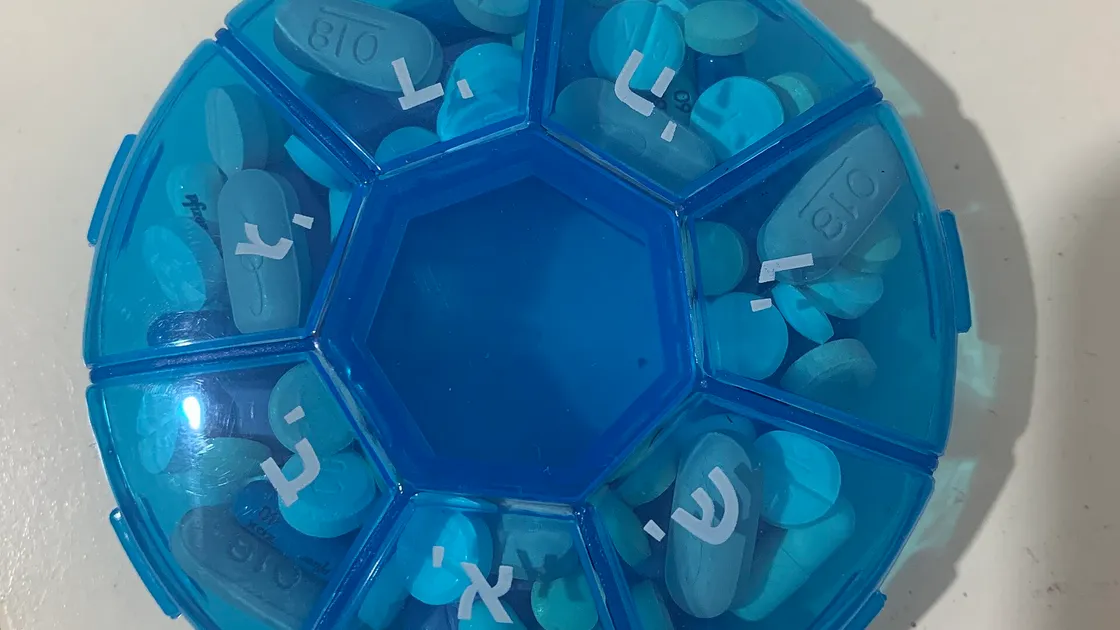
Key takeaways
- Cumulative fractional absorption: 16.3% taking iron daily, 21.8% taking it on alternate days (p=0.0013).
- Cumulative total absorbed: 131.0 mg daily against 175.3 mg alternate-day (p=0.0010). Fewer doses, more total iron.
- Mechanism measured, not assumed: serum hepcidin was higher in the consecutive-day group over the first 14 days (p=0.0031).
- Splitting the dose gained nothing: 120 mg once daily against 60 mg twice daily, 11.8% vs 13.1%, p=0.33 — but twice-daily raised hepcidin (p=0.013).
- A dose of 60 mg or more raises hepcidin for roughly 24 hours, subsiding by 48. That interval is why alternate days works.
- None of this tells you whether you need iron. That is a ferritin result, not a guess, and unnecessary iron is not harmless.
Almost every iron supplement label, and a good deal of clinical advice, says the same two things: take it every day, and split the dose across the day.
Both were tested against the alternative, in iron-depleted women, with labelled iron so that absorption could be measured directly rather than inferred from a blood count months later.
Both lost.
The headline comparison
Forty women. Either 60 mg of iron daily for 14 days, or 60 mg on alternate days for 28 days — the same number of doses, spread over twice the time.
| Daily | Alternate days | |
|---|---|---|
| Cumulative fractional absorption | 16.3% | 21.8% (p=0.0013) |
| Cumulative total iron absorbed | 131.0 mg | 175.3 mg (p=0.0010) |
The second row is the one to sit with.
A higher percentage absorbed would be interesting but could be explained away — a smaller total intake often absorbs more efficiently. That is not what happened. The alternate-day group ended up with more actual iron in them, from the same number of doses.
Why less often gets you more
The trial did not leave the mechanism to speculation. It measured hepcidin, the hormone that regulates iron uptake and shuts it down when iron arrives.
Serum hepcidin was higher in consecutive-day group during first 14 days (p=0.0031)
A later review puts a clock on it. A dose of 60 mg or more triggers a hepcidin rise that:
- persists 24 hours after the dose
- subsides by 48 hours
Line that up against the two schedules and the result stops being surprising.
- Every 24 hours: each dose lands while the previous dose’s blockade is still up.
- Every 48 hours: each dose lands after it has cleared.
You are not taking less iron. You are taking it when your body is still willing to accept it.
And splitting the dose gains nothing
The second trial tested the other half of the standard advice directly: 120 mg once daily against 60 mg twice daily, crossover, 20 women.
| Once daily | Twice daily | |
|---|---|---|
| Fractional absorption | 11.8% | 13.1% (p=0.33) |
| Total absorbed | 44.3 mg | 49.4 mg (p=0.33) |
| Serum hepcidin | lower | higher (p=0.013) |
No significant absorption difference. But splitting did significantly raise hepcidin — the one thing the schedule is supposed to be working around.
So the split-dose instruction costs you an extra swallowing occasion, buys no measurable absorption, and pushes the blocking hormone up.
The timing rule nobody mentions
There is a third finding hiding in the review, and it explains why an evening dose is the worst one.
Hepcidin has its own daily rhythm, rising through the day. A morning iron dose augments that rise. So the review’s instruction is explicit: iron doses should not be given in the afternoon or evening after a morning dose.
An evening second dose is therefore arriving into two overlapping hepcidin peaks at once — the circadian one and the one your own breakfast tablet caused.
The regimen the evidence points at
Stated by the review itself, and quoted rather than paraphrased because the specifics are the whole value:
providing morning doses of 60-120 mg iron as a ferrous salt given with ascorbic acid on alternate days may be an optimal oral dosing regimen for women with iron-deficiency and mild IDA
Four components, each traceable to a measurement:
- A ferrous salt — what the trials used
- 60 to 120 mg, one dose
- In the morning
- On alternate days, with ascorbic acid
And if the speed of haemoglobin recovery matters, the review notes that pooled analysis indicates total absorption is higher still if twice the target daily dose is given on alternate days.
A follow-up study tested exactly that in women with iron-deficiency anaemia, and the gap widened:
Total iron absorption from a single dose of 200 mg given on alternate days was approximately twice that from 100 mg given on consecutive days (P<0.001)
In the same study, fractional absorption on the alternate-day pattern ran 40 to 50% higher than on the consecutive day (P<0.001) — and gastrointestinal side effects were comparable between the doses (P=0.105), which is worth knowing before anyone sells you the schedule as a way to settle your stomach.
The protocol is the specification
Unusually for a supplement, the studied regimen names the form, the dose and the companion: a ferrous salt at 60 to 120 mg, taken with ascorbic acid, in the morning, on alternate days. Check the label for elemental iron rather than the weight of the salt, because those are two different numbers and only the first one is the dose the studies used. Vitamin C is the second half of the specification rather than an optional extra.
Ferrous sulfate with vitamin C
As an Amazon Associate we earn from qualifying purchases. This box exists because the trials specified a form and a dose. It is not a recommendation to start taking iron — see the section below, which argues the opposite unless you have a number.
The part that is more important than the schedule
Everything above is about how to take iron. It assumes you should be taking it.
That assumption is the riskiest thing on this page, and it is not one the trials support, because they enrolled women who were confirmed iron-depleted.
Iron is one of the few supplements where taking it without a deficiency is not merely wasteful. There is no efficient route for the body to excrete a surplus, and tiredness — the symptom that sends most people to the iron aisle — has a long list of causes that iron does not fix.
So:
- Get a ferritin measurement before starting, not after.
- If it is low, ask why it is low. In some people the cause of the deficiency is the more important finding.
- If it is not low, the schedule on this page is a solution to a problem you do not have.
What changed, and why the old advice is not foolish
The 150 to 200 mg daily split-dose recommendation was not carelessness. It follows from an obvious model: a deficit needs filling, so give more, more often.
What arrived later was the ability to label iron and track how much of each individual dose crosses into the body, alongside hepcidin measurement. That exposed a regulatory response the frequency advice had never accounted for.
The guideline was older than the technique. That is a common enough story, and the useful habit it leaves behind is worth more than the iron schedule itself: when advice tells you to do something more often, ask whether anyone has measured what the previous dose does to the next one.
Frequently asked questions
Should I take iron every day or every other day?
On the absorption evidence, alternate days. In a randomised trial of 40 iron-depleted women given 60 mg of iron either daily for 14 days or on alternate days for 28 days, geometric mean cumulative fractional absorption was 16.3% in the consecutive-day group and 21.8% in the alternate-day group (p=0.0013). More importantly, cumulative total iron absorbed was 131.0 mg against 175.3 mg (p=0.0010). That second figure is the one that matters, because it means the alternate-day schedule did not merely absorb a higher proportion of a smaller number of doses; it delivered more iron overall.
How can taking it less often deliver more?
Because of hepcidin, the hormone that regulates iron uptake, and the trial measured it rather than inferring it. An oral iron dose triggers a rise in serum hepcidin, which suppresses absorption of iron taken while it is elevated. In the trial, serum hepcidin was higher in the consecutive-day group during the first 14 days (p=0.0031). A later review describes the timing precisely: doses of 60 mg or more in iron-deficient women, and 100 mg or more in women with iron deficiency anaemia, stimulate an acute increase in hepcidin that persists 24 hours after the dose but subsides by 48 hours. Dosing every 48 hours means each dose arrives after the previous one's blockade has cleared. Dosing every 24 hours means each dose arrives into it.
What about splitting the dose across the day?
It was tested directly and it gained nothing. In a crossover trial, 20 women received either 120 mg of iron once daily or 60 mg twice daily for three consecutive days. Fractional absorption was 11.8% once daily against 13.1% twice daily (p=0.33), and total absorption 44.3 mg against 49.4 mg (p=0.33). Neither difference was significant. But the twice-daily schedule did produce significantly higher serum hepcidin (p=0.013), which is the thing you are trying to avoid. So splitting delivered no measurable absorption benefit while raising the hormone that blocks absorption.
Does the time of day matter?
Yes, and this follows from the same mechanism. Stoffel and colleagues' review notes that the circadian increase in plasma hepcidin is augmented by a morning iron dose, and concludes that iron doses should not be given in the afternoon or evening after a morning dose. In other words, if you are taking one dose, the morning is the studied time; the case against an evening second dose is not that it is inconvenient but that it lands while hepcidin is high for two separate reasons at once.
What does the published optimal regimen actually look like?
The 2020 review states it plainly: providing morning doses of 60 to 120 mg iron as a ferrous salt given with ascorbic acid on alternate days may be an optimal oral dosing regimen for women with iron deficiency and mild iron deficiency anaemia. Four elements, each of which came from a measurement: a ferrous salt, 60 to 120 mg, in the morning, on alternate days, with vitamin C. The review adds that if the speed of haemoglobin response matters, pooled analysis indicates total iron absorption is also higher if twice the target daily dose is given on alternate days.
Why do the guidelines say the opposite?
Because they predate the measurements. Stoffel and colleagues' review notes that some authorities recommend doses of 150 to 200 mg elemental iron per day with the dose split through the day, and that the labelled-absorption measurements indicate this may not be optimal. The older advice was reasonable on its own logic: iron deficiency is a deficit, so give more iron more often. What changed is the ability to label the iron and track how much of each dose is actually absorbed, which exposed a regulatory response that dose-frequency advice had not accounted for. This is a case of the guideline being older than the technique, rather than anybody being careless.
Will alternate-day dosing reduce the side effects?
Probably not, and this is worth being straight about because it is the benefit people most expect. The reasoning for it is sound: the review notes that the fraction absorbed from high doses is low and that unabsorbed iron causes gut irritation, inflammation and dysbiosis, reducing compliance. But when a follow-up study in anaemic women actually compared them, gastrointestinal side effects were comparable between doses (P=0.105). The trials also reported no grade 3 or 4 adverse events. So the case for alternate-day dosing rests on absorption, where the evidence is strong, and not on tolerability, where it has been looked at and did not separate. Take the schedule for the iron, not for the stomach.
Does this mean I should start taking iron?
No, and this is the part of the page that matters most. Everything above concerns how to take iron if you need it. Whether you need it is a separate question that a supplement aisle cannot answer and a symptom list cannot either, because tiredness has many causes and iron is one of the few supplements where taking it without a deficiency carries real risk. The studies here enrolled women who were confirmed iron-depleted. Get a ferritin measurement, and if there is a deficiency, find out why there is one, because in some people the cause is the finding rather than the deficiency.
Sources
Every claim above is drawn from these primary sources. Last checked July 2026.
- 1.Stoffel NU, Cercamondi CI, Brittenham G, Zeder C, Geurts-Moespot AJ, Swinkels DW, Moretti D, Zimmermann MB. Iron absorption from oral iron supplements given on consecutive versus alternate days and as single morning doses versus twice-daily split dosing in iron-depleted women: two open-label, randomised controlled trials. Lancet Haematol. 2017;4(11):e524-e533. PMID 29032957. Two prospective, open-label, randomised controlled trials assessing iron absorption using labelled ferrous sulfate in iron-depleted women aged 18-40. Study 1: 40 women (21 consecutive-day, 19 alternate-day) received 60 mg iron daily for 14 days or on alternate days for 28 days; geometric mean cumulative fractional iron absorption 16.3% (9.3, 28.8) consecutive-day versus 21.8% (13.7, 34.6) alternate-day (p=0.0013); cumulative total iron absorption 131.0 mg (71.4, 240.5) versus 175.3 mg (110.3, 278.5) (p=0.0010); serum hepcidin higher in the consecutive-day group during the first 14 days (p=0.0031). Study 2: 20 women received 120 mg once daily or 60 mg twice daily for three consecutive days with crossover; no significant difference in fractional absorption (11.8% [7.1, 19.4] once daily vs 13.1% [8.2, 20.7] twice daily; p=0.33) or total absorption (44.3 mg [29.4, 66.7] vs 49.4 mg [35.2, 69.4]; p=0.33); twice-daily dosing resulted in higher serum hepcidin (p=0.013). No grade 3 or 4 adverse events reported. Authors' conclusion: in iron-depleted women, daily divided doses increase serum hepcidin and reduce iron absorption; alternate-day single-dose regimens optimise absorption and may be preferable. Checked 13 August 2026
- 2.Stoffel NU, von Siebenthal HK, Moretti D, Zimmermann MB. Oral iron supplementation in iron-deficient women: How much and how often? Mol Aspects Med. 2020;75:100865. PMID 32650997. Notes that some experts recommend doses of 150-200 mg elemental iron per day with the dose split through the day, and that recent studies suggest this may not be optimal, because the fraction absorbed from high doses is low and unabsorbed iron causes gut irritation, inflammation and dysbiosis, reducing compliance. Findings from serum hepcidin profiles and stable iron isotopes in young women: (a) oral iron doses of 60 mg or more in iron-deficient women, and doses of 100 mg or more in women with IDA, stimulate an acute increase in hepcidin that persists 24 h after the dose but subsides by 48 h; (b) therefore, to maximise fractional iron absorption, oral doses of 60 mg or more should be given on alternate days; (c) the circadian increase in plasma hepcidin is augmented by a morning iron dose, therefore iron doses should not be given in the afternoon or evening after a morning dose. Pooled analysis indicates total iron absorption is also higher if twice the target daily iron dose is given on alternate days. Conclusion: providing morning doses of 60-120 mg iron as a ferrous salt given with ascorbic acid on alternate days may be an optimal oral dosing regimen for women with iron deficiency and mild IDA. Checked 13 August 2026
- 3.Stoffel NU, Zeder C, Brittenham GM, Moretti D, Zimmermann MB. Iron absorption from supplements is greater with alternate day than with consecutive day dosing in iron-deficient anemic women. Haematologica. 2020;105(5):1232-1239. PMID 31413088. The follow-up applying the alternate-day comparison to women with iron-deficiency anaemia rather than iron depletion alone. Serum hepcidin was elevated on day 3 versus day 2 (P<0.001) or day 5 (P<0.01). Fractional iron absorption on days 2 and 5 was 40-50% higher than on day 3 (P<0.001), with no significant difference between days 2 and 5. Total iron absorption from a single dose of 200 mg given on alternate days was approximately twice that from 100 mg given on consecutive days (P<0.001). Gastrointestinal side effects were comparable between doses (P=0.105). Authors' conclusion: alternate day dosing of oral iron supplements in anemic women may be preferable because it sharply increases fractional iron absorption. Checked 13 August 2026